Powerproteinplates

Seafood

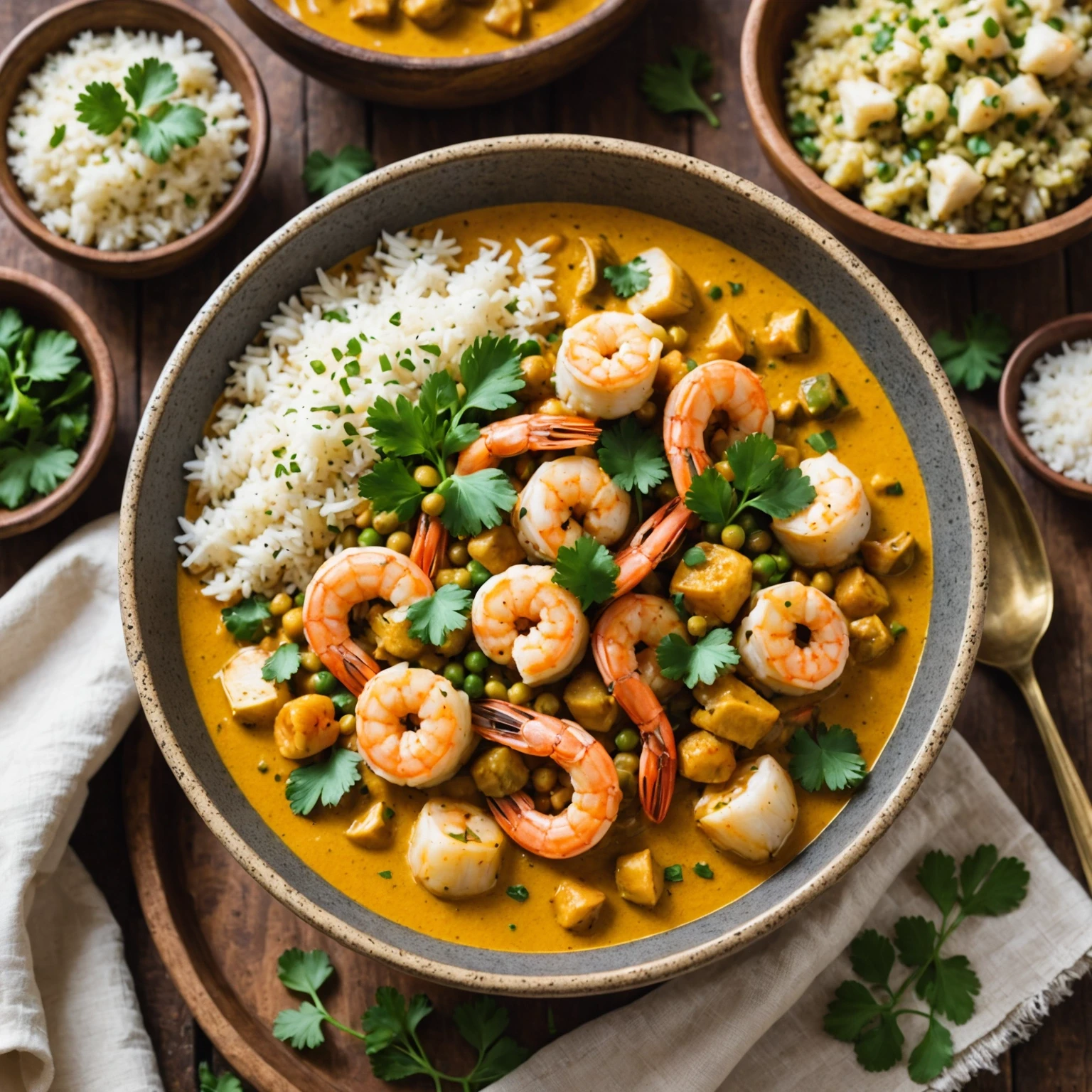
Seafood Coconut Curry with Mung Beans and Cauliflower Rice

By Powerproteinplates Editorial TeamPublished May 1, 2026 | Updated Jul 22, 2026
South Asian 45 mins high-proteindairy-freegluten-freemeal-prep-friendlybalancedwhole-foodsanti-inflammatoryeasy-recipeslow-carbenergy-boost

Experience a nourishing South Asian Seafood Coconut Curry loaded with plant-based mung beans and accompanied by low-carb cauliflower rice. This high-protein, dairy-free, and gluten-free curry recipe is perfect for meal prep, fueling workouts, and enhancing recovery for athletes and health-focused individuals.

Seafood Coconut Curry with Mung Beans and Cauliflower Rice
Prep 15 min
Cook 30 min
Total 45 min
Servings 4
Difficulty easy
Cuisine South Asian

Recipe Details

Prep15 min
Cook30 min
Total45 min
Servings4
Difficultyeasy
CuisineSouth Asian
Add To Favorites

Ingredients

Servings 4
  • 1 cup mung beans, rinsed and soaked for 2 hours
  • 1 pound mixed seafood (shrimp, scallops, and white fish), cleaned and cut into bite-sized pieces
  • 1 small head cauliflower, grated or processed into rice-sized pieces
  • 1 tablespoon coconut oil
  • 1 medium onion, finely chopped
  • 3 garlic cloves, minced
  • 1-inch piece fresh ginger, grated
  • 2 green chilies, sliced (adjust to taste)
  • 1 tablespoon curry powder
  • 1 teaspoon turmeric powder
  • 1 teaspoon cumin seeds
  • 1 teaspoon coriander powder
  • 1/2 teaspoon smoked paprika
  • 1 can (14 oz) full-fat coconut milk
  • 1 1/2 cups vegetable broth or water
  • 1 tablespoon fresh lime juice
  • Salt to taste
  • Fresh cilantro leaves, chopped for garnish
  • 1 teaspoon mustard seeds
  • 1 sprig curry leaves (optional)
  • Black pepper, freshly ground, to taste
Powerproteinplates Seafood Coconut Curry with Mung Beans and Cauliflower Rice ingredients image

Instructions

  1. Drain the soaked mung beans and place them in a pot with 3 cups of water. Bring to a boil, then reduce heat and simmer for 20-25 minutes until tender but still hold their shape. Drain and set aside.
  2. Heat coconut oil in a large pan over medium heat. Add mustard seeds and cumin seeds; when they start to pop, add curry leaves if using, then immediately add the chopped onion.
  3. Sauté onions until translucent and golden, about 5-7 minutes. Add minced garlic, grated ginger, and sliced green chilies, cooking for another 2 minutes until fragrant.
  4. Add curry powder, turmeric, coriander powder, and smoked paprika. Toast the spices for 1 minute, stirring frequently to awaken their aromas.
  5. Pour in the full-fat coconut milk and vegetable broth. Stir well and bring the mixture to a gentle simmer.
  6. Add the cooked mung beans to the curry base, mixing gently. Simmer uncovered for 5 minutes to allow flavors to meld.
  7. Add the mixed seafood to the curry. Cook gently for 5-7 minutes until the seafood is opaque and tender. Season with salt and freshly ground black pepper to taste.
  8. Meanwhile, heat a non-stick skillet over medium heat. Add the cauliflower rice, spreading evenly. Cook for 5-7 minutes, stirring occasionally, until slightly softened but still firm. Season with salt and pepper.
  9. Remove the curry from heat and stir in fresh lime juice for brightness.
  10. Serve the seafood coconut curry hot over the cauliflower rice, garnished with chopped fresh cilantro.
  11. Store leftovers in airtight containers for up to 4 days. For optimal meal prep, keep cauliflower rice separate and combine before serving.
Powerproteinplates Seafood Coconut Curry with Mung Beans and Cauliflower Rice process and serving image

Tips

Protein Highlight

seafood gives this seafood recipe its main protein focus, while supporting ingredients add texture, fiber, or slow-burning carbohydrates. Keep the protein portion clear on the plate instead of letting sauces, toppings, or starches become the bulk of the meal.

Goal Fit

This recipe fits meal prep, active-week eating, and balanced family meals because it combines familiar ingredients with a fitness-friendly structure. Use it when you want a practical option that can support recovery, satiety, or steady energy without turning the meal into a supplement-style dish.

Protein Density

To keep the protein density strong, measure calorie-dense extras and add more seafood or a compatible high-protein side before increasing the starch or sauce. If you scale the recipe, preserve the ratio between the protein base and the vegetables, grains, or toppings.

Frequently Asked Questions

Can I meal prep Seafood Coconut Curry with Mung Beans and Cauliflower Rice?
Yes. Portion it into airtight containers and keep toppings, sauces, or crunchy finishes separate when that will protect the texture.
How can I increase the protein?
Add a little more seafood or pair the recipe with a compatible high-protein side such as Greek yogurt, eggs, tofu, beans, or lean meat depending on the recipe style.
Can I make it lighter?
Use measured oil, lighter dairy or sauce options, and a larger vegetable portion while keeping the main protein amount steady.
What should I watch when swapping ingredients?
Keep moisture, salt, and cooking time in mind because high-protein swaps can dry out or firm up faster than the original ingredient.

Ingredient Replacements

  • mung beans, rinsed and soaked for 2 hours: Use the closest lean protein or high-protein base that fits the recipe format, and keep the portion similar so the texture and protein balance stay intact.
  • mixed seafood , cleaned and cut into bite-sized pieces: Swap with a similar cooked grain, vegetable, dairy item, or pantry ingredient when needed, adjusting liquid or cooking time if the replacement is wetter or drier.
  • small head cauliflower, grated or processed into rice-sized pieces: Use a related spice, herb, sauce, or aromatic if this ingredient is unavailable, then taste before adding extra salt or heat.
  • Gluten-free option: Choose certified gluten-free grains, crumbs, sauces, and pantry items when cross-contact matters.
  • Dairy-free option: Replace yogurt, cheese, kefir, or milk-based ingredients with unsweetened high-protein dairy-free alternatives when they fit the recipe.
  • Calorie adjustment: Keep oils, sweeteners, nuts, cheese, and creamy sauces measured so the recipe stays aligned with a protein-forward plate.

Storage

Cool Seafood Coconut Curry with Mung Beans and Cauliflower Rice before storing, refrigerate in airtight containers for up to 4 days, keep crisp toppings or fresh garnishes separate when useful, freeze only if the main ingredients tolerate thawing well, and reheat gently with a splash of liquid or a short oven, skillet, microwave, or air-fryer warm-up that matches the recipe texture.

Related Articles

Read related guides and practical cooking tips.

More Recipes

Explore more recipes you may like.

Reviews

Rate this recipe and share a photo of your result.

No reviews yet.

Newsletter

Stay In The Loop

Get fresh recipes, articles, and updates from Powerproteinplates.